Leadership isn’t always about making big decisions.
Sometimes, it’s about how you handle the quiet, repeated moments—especially when mistakes are involved.
There was an elephant in the room.
One of my team members was making frequent errors. Everyone knew it. He knew it too.
But somehow, no one had ever really talked to him about it with honesty and care.
Not in a way that invited change—only in a way that pointed it out.
When I first stepped into that role, I was told about the mistakes. Quietly. Repeatedly.
But I also noticed something else:
He showed up early.
He followed directions.
He tried.
That contrast told me something.
So when another issue came up—minor this time—I knew I had a choice.
I could correct him.
Or I could connect with him first.
We sat down for a one-on-one. I didn’t begin with blame. I began with presence.
I asked:
• “What’s going on?”
• “Is there something that’s making this harder for you?”
• “What kind of support would actually help?”
And then I said gently:
“Let’s turn this around—together. I’ll support you. I’m with you.”
At that moment, something shifted.
His shoulders softened. His eyes brightened.
He didn’t say, “thank you.” He didn’t need to.
There was an unspoken understanding:
I see you. I hear you. I understand you.
He let his guard down—and the conversation opened up.
He spoke honestly about what was hard. What he was carrying. What he needed.
And to me, that was everything.
The hardest part wasn’t the mistake.
It was creating the space where he could trust me enough to talk.
Because once someone feels safe, they stop hiding.
And when they feel seen, they stop resisting.
That moment reminded me:
The most important part of correction isn’t the fix—it’s the reach.
When people feel supported, they no longer carry the burden alone.
And leadership, at its core, is not about correcting people into perfection.
It’s about walking with them through growth.
We’ll still give feedback. That doesn’t change.
But how we give it—that’s everything.
When connection comes first, feedback can be clear, kind, and direct—without being harsh.
You don’t have to push. You don’t have to raise your voice.
You simply say:
“This is what we talked about. This is what I’m seeing. Let’s find a way forward—together.”
You’re not pointing at the problem.
You’re standing beside it.
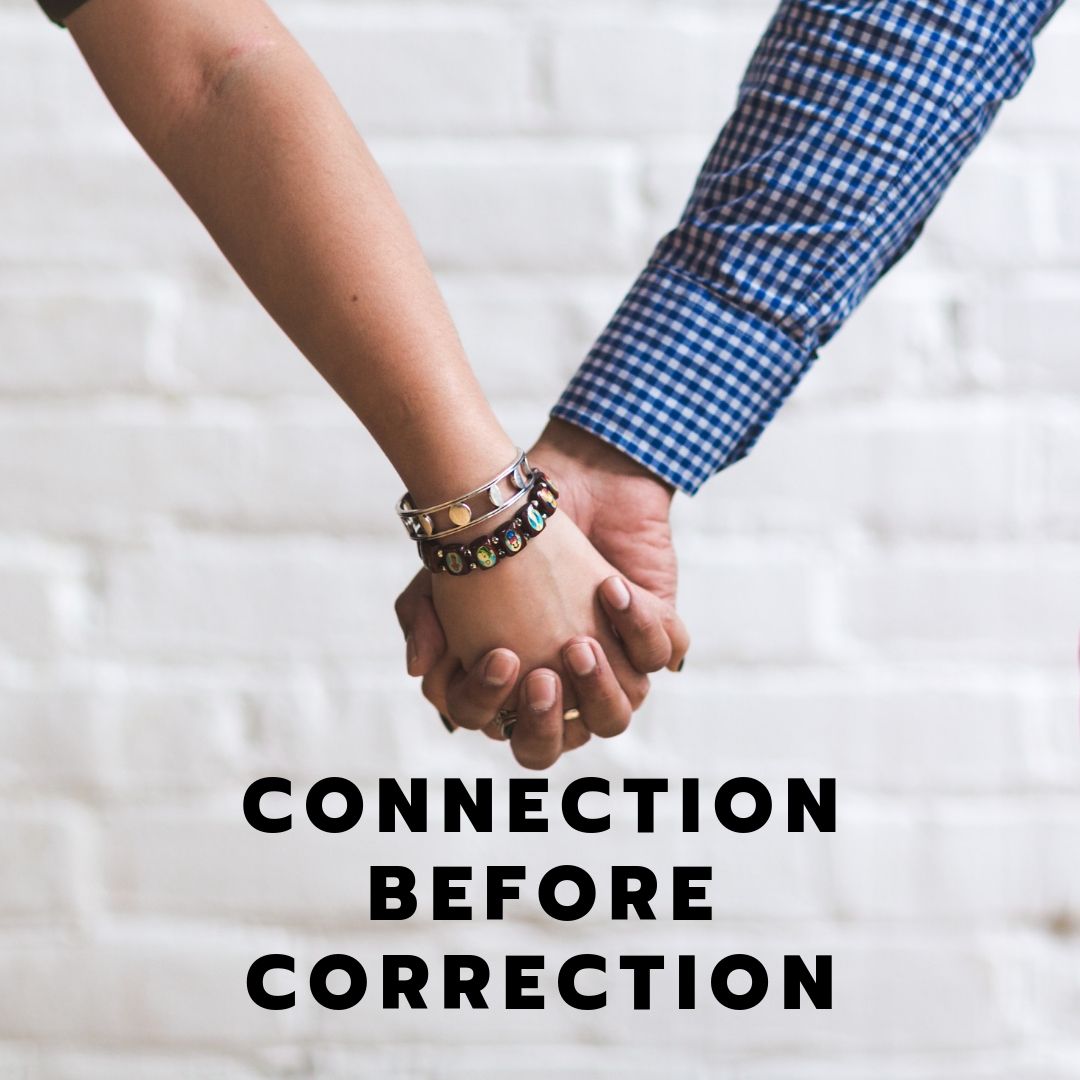
That’s the power of connection before correction.
Pause & Reflect
Is there someone you’re leading who might grow more if they first felt safe?
What would shift if you connected with them—before you corrected them?
✎ Journaling Prompt:
Think of one person on your team.
What would change if your next conversation started with connection?